Cookies

We use essential cookies to make our site work. We'd also like to set analytics cookies that help us make improvements by measuring how you use the site. These will be set only if you accept.

For more detailed information about the cookies we use, see our cookies page.

Essential Cookies

Essential cookies enable core functionality such as security, network management, and accessibility. For example, the selections you make here about which cookies to accept are stored in a cookie.

You may disable these by changing your browser settings, but this may affect how the website functions.

Analytics Cookies

We'd like to set Google Analytics cookies to help us improve our website by collecting and reporting information on how you use it. The cookies collect information in a way that does not directly identify you.

Third Party Cookies

Third party cookies are ones planted by other websites while using this site. This may occur (for example) where a Twitter or Facebook feed is embedded with a page. Selecting to turn these off will hide such content.

Skip to main content

(h) Church / (i )Bishop's Palace

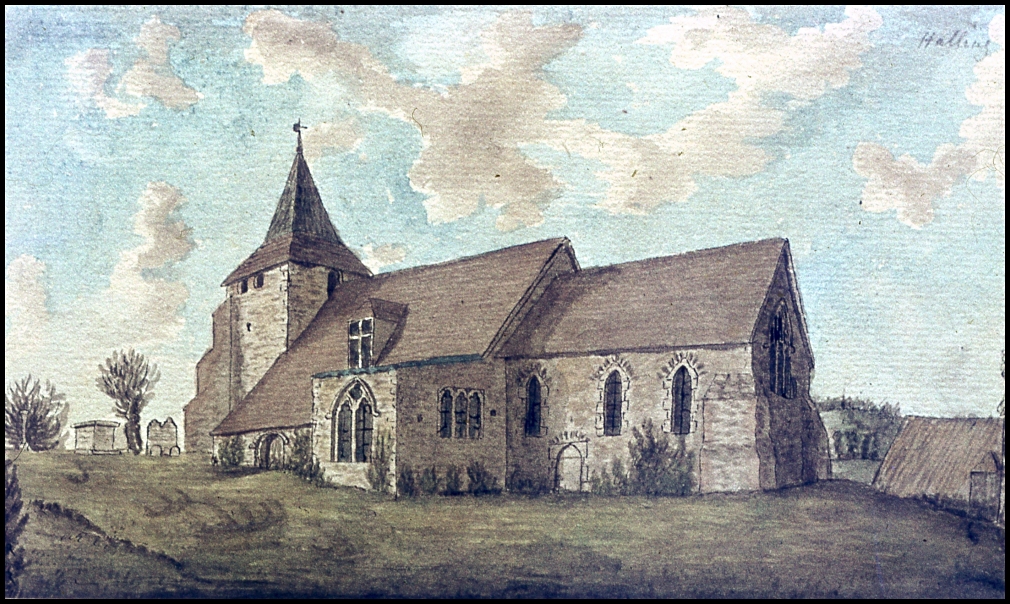
'h' St John the Baptist Church The church of St. John the Baptist has stood here for at least 1200 years. The Normans built the stone church in the early 11th century but it was greatly extended in the ‘Victorian Restoration’ of 1887 and much of the original stonework was lost. A unique set of rare medieval wall paintings were discovered during that work and these have recently been restored.

'i' Halling Bishop's Palace A section of ragstone wall bearing three lancet windows is all that remains of the once-sprawling early medieval manor house known as the Bishops Palace. Built at the end of the 11th century, it was one of the six country residences of the Bishops of Rochester. It ceased being used by the bishopric in the mid-16th century and was leased out as a private dwelling. The noted antiquarian William Lambarde lived there in the late 16th century. By the early 18th century the manor had been abandoned and was derelict. It briefly served as a workhouse in the late 18th century before its remnants were largely demolished by the Hilton & Anderson cement company upon the building of their factory in the 1870s. What remains has been awarded Scheduled Monument status. For more information, go to:
https://www.hugofox.com/community/halling-historical-society-18475/the-bishops-palace/?preview=4cf97371b71e43d0afaaf0c51b917bf0


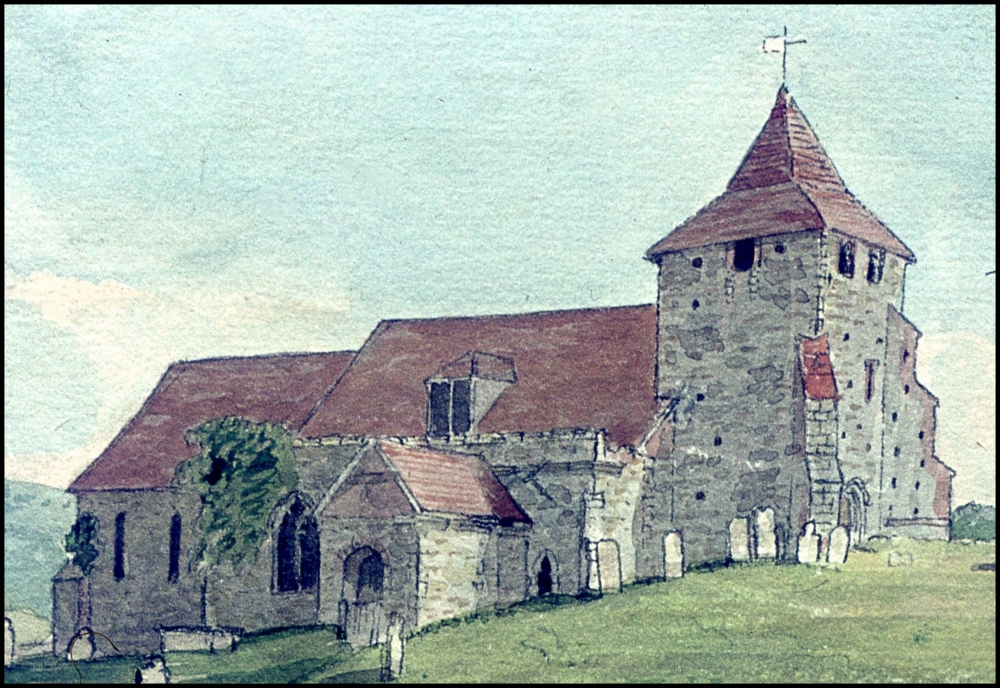
The church in 1820 The church in 1820
The church in 1830 The church in 1830
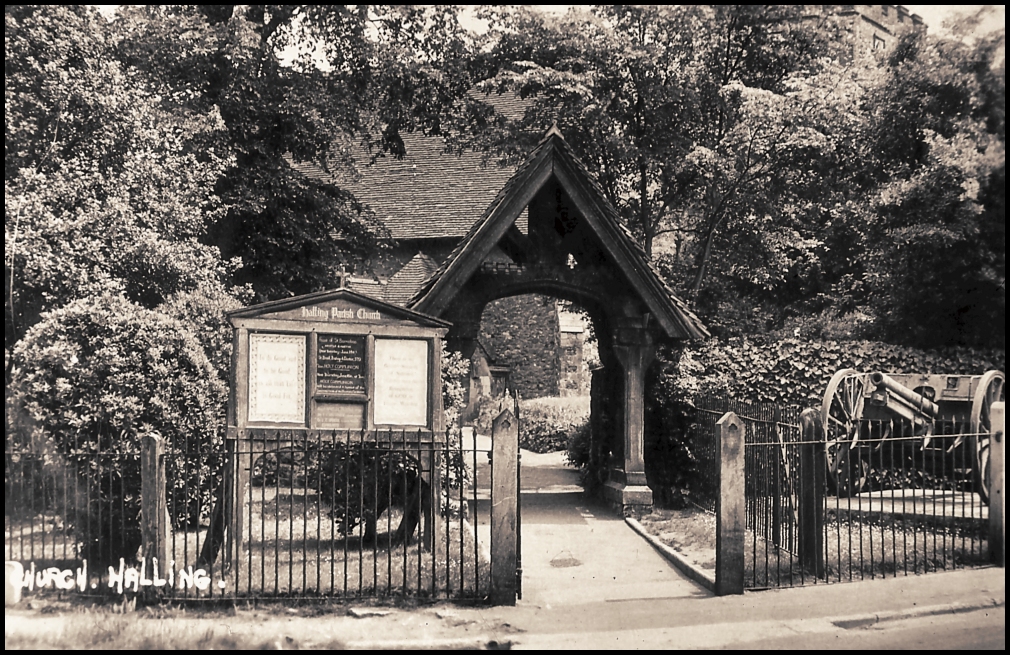
1920 . . .with WW1 field gun memorial 1920 . . .with WW1 field gun memorial
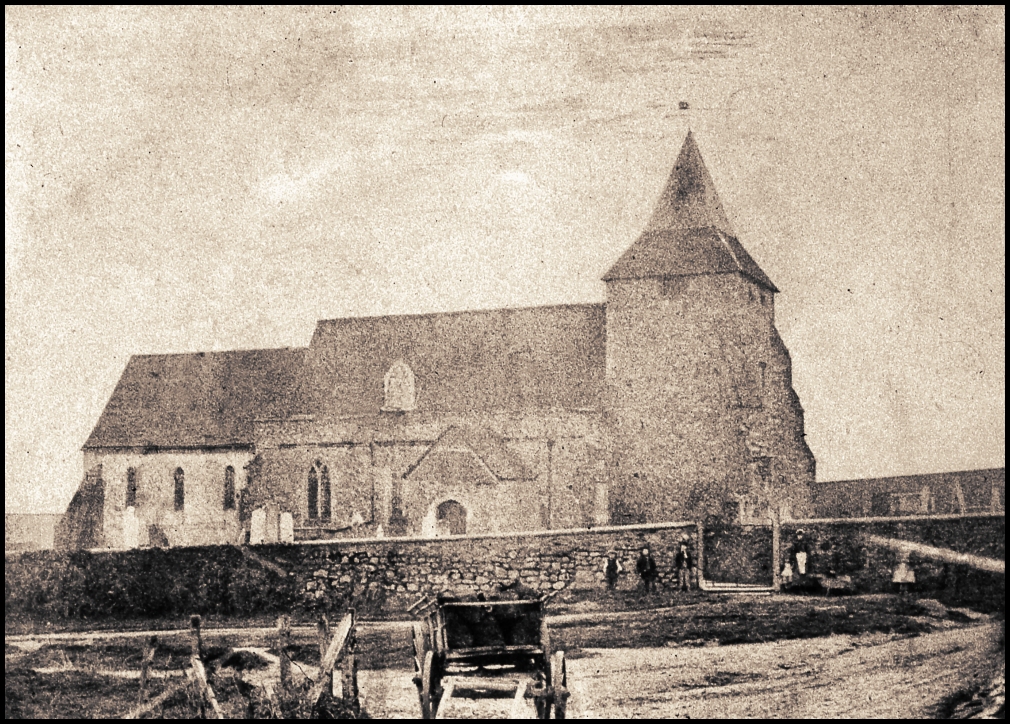
The church in 1880 The church in 1880
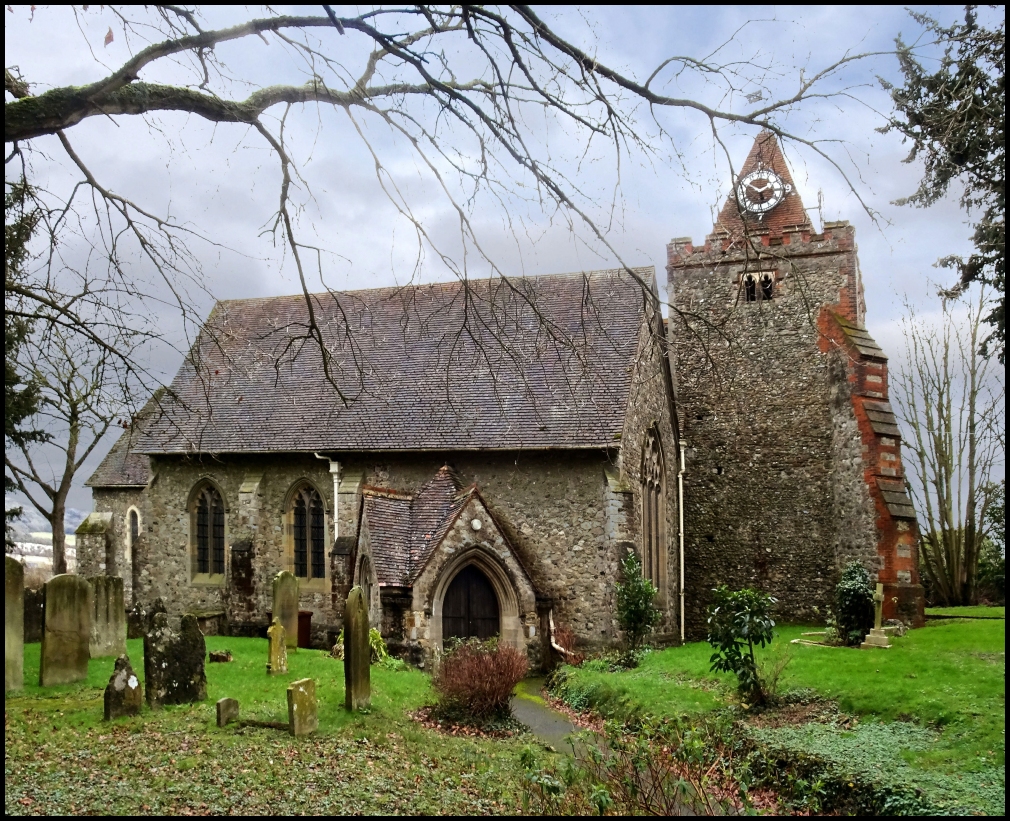
2024 2024